

Description
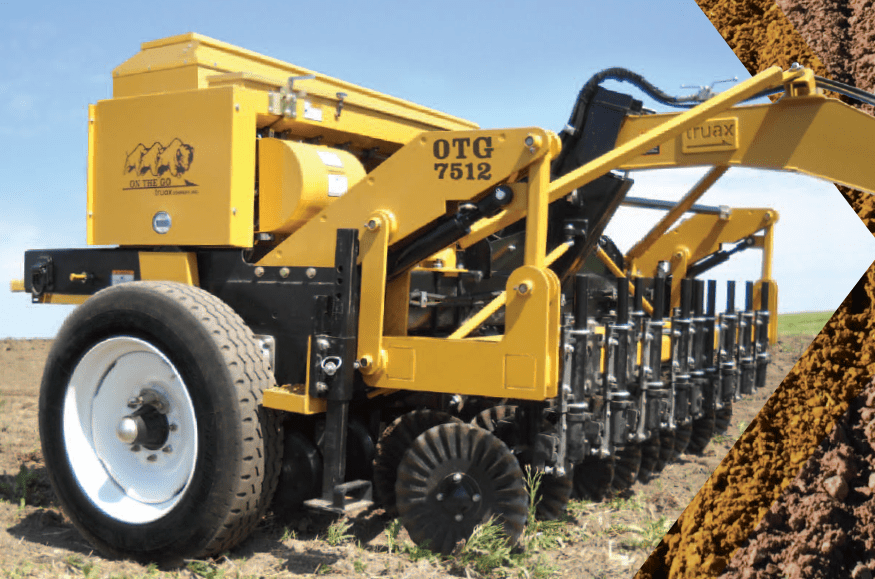
The Roughrider drill was designed to be a minimum till option for seeding non-cultivated rangelands. The disks are less offset and do not side-cast dirt as much as the rangeland drill. It uses hydraulic down presser to help the disks cut through thatch and soil crusting.
Application
Considerations:
- The weight of the Roughrider drill is nearly double that of the traditional rangeland drill, so transport and setup are much more difficult.
- The hydraulic down pressure does not allow the disk arms to flex very much, so it is susceptible to breaking if there is any kind of rock or other obstacle on the site. Use should be limited to very flat, rock-free locations.
Images
References / Additional Information
Ott, J.E.; Cox, R.D.; Shaw, N.L.; Newingham, B.A.; Ganguli, A.C.; Pellant, M.; Roundy, B.A.; Eggett, D.L. 2016. Postfire drill-seeding of Great Basin plants: Effects of contrasting drills on seeded and nonseeded species. Rangeland Ecology and Management 69(5): 373-385.
Ott, J.E.; Halford, A.; Shaw, N. 2016. Seeding techniques for sagebrush community restoration after fire. Great Basin Factsheet Series Number 14. Sage Grouse Initiative. 6 p.
Ott, J.E.; Cox, R.D.; Shaw, N.L. 2017. Comparison of postfire seeding practices for Wyoming big sagebrush. Rangeland Ecology and Management. 70(5): 625-362.
Truax, J. 1991. Truax native grass drill. In: Rangeland Technology Equipment Council. 1990 Annual Report. 9122-2805-MTDC. Missoula, MT: U.S. Department of Agriculture, Forest Service Technology and Development Center: 29.