

Description
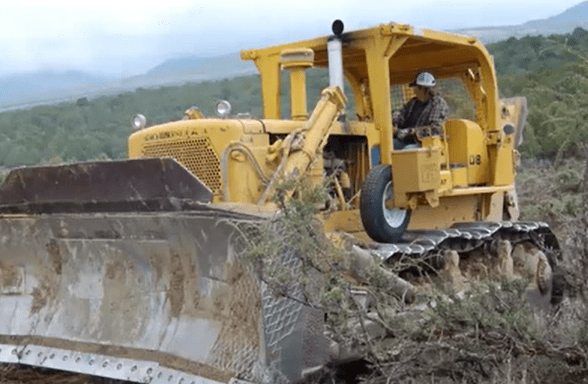
Scalpers or fireplows originally designed to build wide, shallow firelines have been adapted for removing existing vegetation competition for interseeding into aggressive perennial or nonnative annual grasses. They create a wide, flat-bottomed trench that serves as a seed bed when incorporated with a seed distribution system.
Application
There are at least two available scalper types: a tractor-mounted 3-point system and a modified D-5 bulldozer (Mad Max). Both have ripper teeth that dig a deep furrow seed bed and broadcasters for surface seeding the exposed soil.
Considerations:
- Contours of the slope should be carefully followed to minimize erosion.
- Can operate on slopes of up to 20%.
Images
References / Additional Information
Dykeman, K.; Hallman, D. 1983. Forest Service Equipment Development Center activities. In: 37th Annual Report of the Vegetative Rehabilitation and Equipment Workshop (VREW); 1983 February 13-14; Albuquerque, NM. Missoula, MT: USDA Forest Service Equipment Development Center: 49-57. (Report discusses front-mounted dozer scarifier, rear mounted dozer, spot site scarifier).
Stevens, R. 1991. Depth of interseeding scalps can affect growth of seeded mountain big sagebrush. In: Rangeland Technology Equipment Council. 1990 Annual Report. 9122-2805-MTDC. Missoula, MT: USDA Forest Service Technology and Development Center: 60-61. (Report discusses interseeder, scalper).
Summers, D.; Gunnell, K.; Larsen, R.; Newton, J. 2024. Novel equipment and restoration methods in the western US. In: Revegetation Technology and Equipment Council. 2024. Revegetation Technology and Equipment Council Symposium (SRM 2024); 2024 January 1; Sparks, NV: YouTube 19:26-35:26. (Presentation discusses Dixie harrow, dozer scalper, chain harrow, pipe harrow, power harrow, scalper).